Introduction
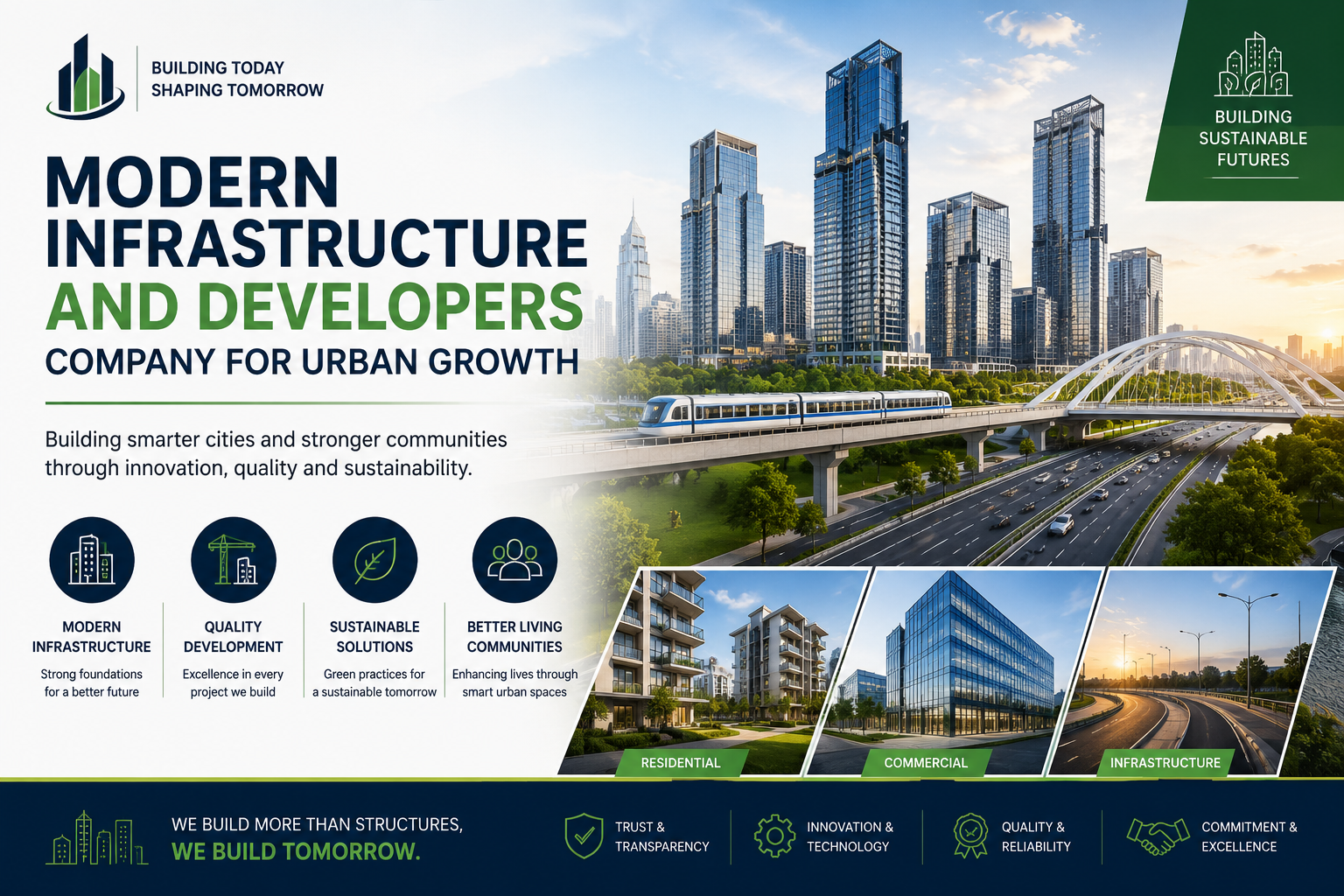
Urban growth is transforming cities around the world, creating a growing demand for modern infrastructure and well-planned development projects. As populations increase and urban areas expand, the need for reliable infrastructure solutions becomes more important than ever. Modern infrastructure and developers companies play a crucial role in shaping sustainable cities by creating residential communities, commercial hubs, transportation networks, and public facilities that support economic and social development.
A professional infrastructure and development company contributes to urban growth by combining innovation, quality construction, and strategic planning. These organizations help build the foundations of modern living while ensuring long-term value and sustainability.
The Role of Infrastructure in Urban Development
Infrastructure serves as the backbone of any growing city. Roads, bridges, residential complexes, commercial buildings, water systems, and public utilities are essential for supporting the needs of modern communities.
Without proper infrastructure, cities face challenges such as traffic congestion, inadequate housing, limited business opportunities, and poor public services. Infrastructure developers help overcome these challenges by creating efficient and well-planned projects that improve connectivity, accessibility, and quality of life.
Modern infrastructure development not only supports current needs but also prepares cities for future growth and expansion.
Importance of Modern Developers in Urban Growth
Developers play a vital role in transforming undeveloped land into productive residential, commercial, and industrial spaces. Their expertise in planning, design, construction, and project management helps create communities that meet the needs of modern society.
A reliable developers company focuses on:
- High-quality construction
- Innovative project planning
- Sustainable development practices
- Timely project delivery
- Customer satisfaction
These factors contribute significantly to urban growth and economic progress.
Smart Construction for Modern Cities
Today’s Modern infrastructure projects rely on smart construction techniques and advanced technologies. Modern developers use innovative tools to improve project efficiency, reduce construction time, and enhance building quality.
Smart construction includes:
Digital Project Planning
Advanced software and design tools help developers create accurate project plans and improve coordination between teams.
Sustainable Building Practices
Environmentally friendly materials and energy-efficient designs help reduce environmental impact and support green development.
Modern Engineering Solutions
Innovative engineering techniques improve structural strength, safety, and durability.
These technologies allow infrastructure companies to create future-ready developments that align with modern urban requirements.
Supporting Economic Growth
Infrastructure development is closely linked to economic progress. New residential projects, commercial complexes, industrial parks, and transportation systems create employment opportunities and attract investments.
Well-planned infrastructure encourages business growth by providing better connectivity, efficient transportation, and improved public services. As a result, local economies benefit from increased commercial activity and enhanced property values.
Developers who invest in quality modern infrastructure contribute directly to the long-term prosperity of cities and communities.
Creating Sustainable Urban Communities
Sustainability has become a key focus in modern infrastructure development. Urban growth must be balanced with environmental responsibility to ensure long-term benefits for future generations.
Modern developers incorporate sustainable features such as:
- Energy-efficient buildings
- Water conservation systems
- Green spaces and landscaping
- Eco-friendly construction materials
- Waste management solutions
These initiatives help create healthier living environments while reducing the environmental footprint of urban development projects.
Enhancing Quality of Life
Modern infrastructure projects are designed to improve the overall quality of life for residents and businesses. Well-planned communities provide access to essential services, recreational facilities, transportation networks, and commercial centers.
Key benefits include:
Better Connectivity
Improved roads and transportation systems make travel easier and more efficient.
Improved Housing Solutions
Modern residential developments offer comfort, security, and convenience.
Access to Essential Services
Healthcare facilities, schools, shopping centers, and public amenities enhance everyday living.
Safe and Organized Communities
Thoughtful planning creates safer environments and promotes community well-being.
These improvements make cities more attractive places to live, work, and invest.
Importance of Quality and Reliability
The success of any infrastructure project depends on quality construction and reliable project execution. Experienced developers follow industry standards, use high-quality materials, and implement strict quality control measures throughout the construction process.
Reliable infrastructure companies focus on transparency, professionalism, and customer satisfaction, ensuring that projects are completed on time and according to specifications.
This commitment to excellence helps build trust among investors, buyers, and stakeholders.
Conclusion
Modern infrastructure and developers companies are essential drivers of urban growth and development. Through innovative construction methods, sustainable practices, and strategic planning, they create the residential, commercial, and public infrastructure needed for thriving cities. By supporting economic growth, improving quality of life, and promoting sustainable development, these companies play a vital role in shaping the future of urban communities. As cities continue to expand, the contribution of modern infrastructure developers will remain critical in building stronger, smarter, and more connected environments for future generations.
About the Author