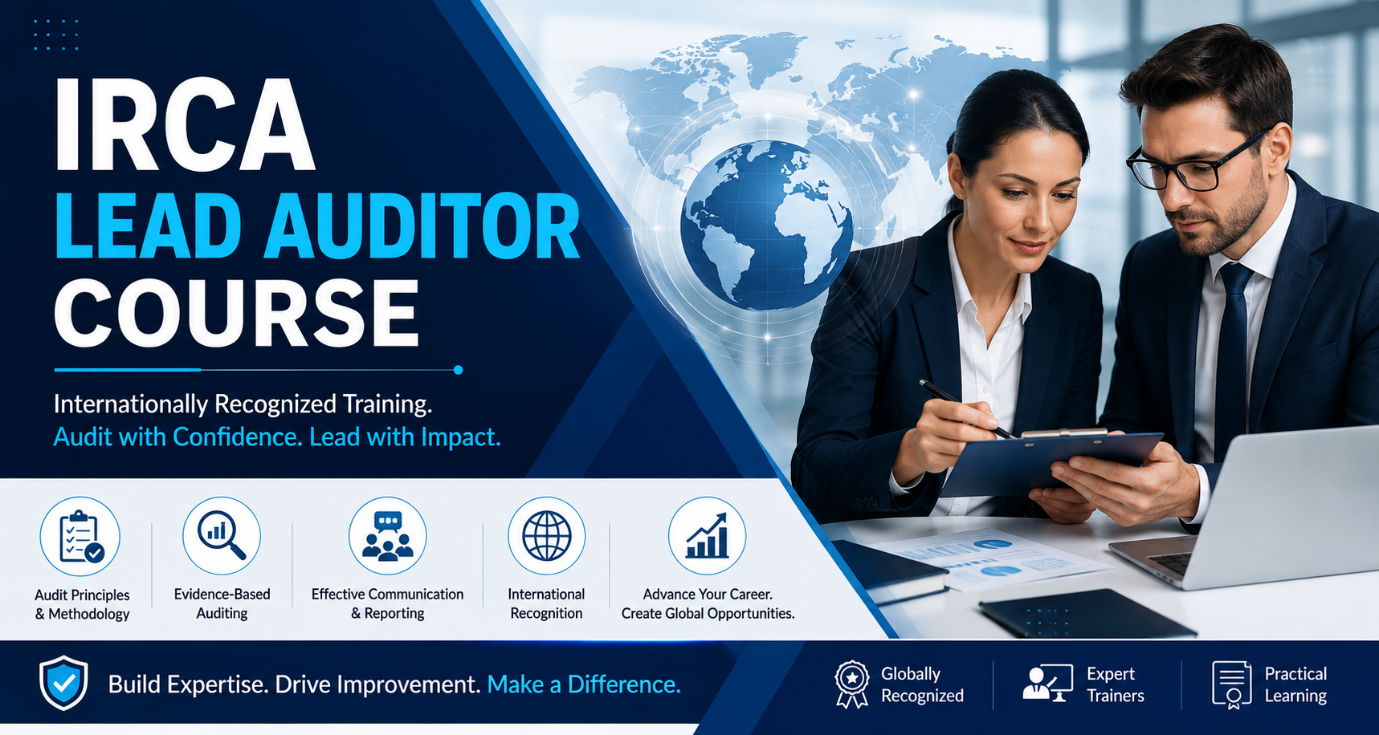
Professionals working in quality, compliance, operations, and management systems increasingly need strong auditing skills. As organizations work with international customers, suppliers, and certification requirements, qualified auditors can play an important role in evaluating whether management systems are working effectively.
One credential that professionals may encounter when researching auditor training is IRCA. Understanding what IRCA represents, what an IRCA Lead Auditor Course involves, and how this training can support professional development can help candidates make better decisions.
This guide explores the role of IRCA-related auditor training, the skills participants can develop, career applications, and important factors to consider before selecting a course.
Why IRCA Lead Auditor Training Matters
The auditor training market includes many courses, credentials, and professional designations. Their recognition, requirements, assessment methods, and career applications can vary.
For professionals comparing different programs, understanding the purpose of internationally recognized auditor training is an important first step.
Understanding Different Auditor Credentials
Not every lead auditor program follows the same structure. Some courses focus primarily on auditing principles, while others provide a more structured approach to management system auditing.
Before enrolling, professionals should consider their career objectives, target industries, and the type of auditing work they want to pursue.
Making a Better Training Decision
Choosing an IRCA Lead Auditor Course should not be based only on the name of the credential. Candidates should review the course requirements, assessment process, provider recognition, delivery format, and relevance to their professional goals.
This approach makes it easier to compare programs and select training that supports long-term career development.
What Is an IRCA Lead Auditor Course?
IRCA is associated with the International Register of Certificated Auditors and has played an important role in professional auditor recognition.
An IRCA Lead Auditor Course provides structured knowledge about auditing principles and practices. Participants learn how audits can be planned, conducted, documented, and reported in a systematic manner.
The training can be particularly relevant to professionals who work with management systems or organizations operating across different markets.
Understanding the Audit Cycle
A key part of lead auditor training is understanding the complete audit process.
Depending on the specific program, participants may learn about:
- Audit planning and preparation
- Conducting interviews
- Collecting objective evidence
- Evaluating audit evidence
- Identifying and documenting findings
- Communicating audit results
- Preparing audit reports
Learning these activities as part of a structured methodology can help participants approach audits more consistently.
Assessment and Auditor Competence
Assessment is an important element of professional auditor training. Participants may need to demonstrate their understanding through examinations, practical activities, or other assessments specified by the course.
The purpose is to evaluate whether participants understand the relevant auditing principles and can apply them appropriately.
Key Skills Developed Through Lead Auditor Training
Completing IRCA Lead Auditor Training can help professionals develop practical skills that are useful in auditing, compliance, quality management, and consulting environments.
Applying a Consistent Audit Methodology
A structured audit methodology helps auditors approach different organizations in a consistent way.
Participants can learn how to organize audit activities, evaluate evidence, communicate with auditors, and document findings. A consistent approach can also make audit results easier to understand and review.
Conducting Evidence-Based Audits
Objective evidence is central to effective auditing.
Auditors need to collect and evaluate relevant information rather than relying on assumptions. Training can help participants understand how evidence supports audit conclusions and how findings should be documented.
This evidence-based approach is valuable because organizations need clear and defensible information when addressing audit findings.
Writing Clear Audit Findings
Audit reporting is another important professional skill.
Auditors need to explain findings clearly and connect them with appropriate evidence. Well-structured reporting helps organizations understand what was identified and determine how to address relevant issues.
Strong written communication can therefore be just as important as technical audit knowledge.
Career Benefits of an IRCA Lead Auditor Course
Professional auditor training can complement existing technical and management experience.
For individuals working in quality, compliance, consulting, or management systems, additional auditing expertise may strengthen their professional profile.
Supporting International Career Opportunities
Professionals working with multinational organizations may benefit from understanding consistent auditing practices.
Internationally relevant training can also be useful for professionals who want to work with organizations, clients, suppliers, or certification-related activities across different markets.
However, specific employment and auditor registration requirements can vary by organization, industry, and location.
[H3] Strengthening Professional Credibility
Recognized auditor training can demonstrate a commitment to structured auditing practices.
For consultants and professionals who interact with international clients, this knowledge may support clearer communication about audit processes and management system requirements.
Combining Auditing With Industry Experience
Auditing skills can become more valuable when combined with sector-specific knowledge.
For example, a quality professional with manufacturing experience can apply auditing skills within quality management systems. Similarly, professionals working in health, safety, environmental, information security, or other areas can combine their technical background with management system auditing knowledge.
Who Can Benefit From Lead Auditor Training?
An IRCA Lead Auditor Course may be relevant to several groups of professionals.
Quality and Compliance Professionals
Quality managers, compliance professionals, internal auditors, and management representatives may use lead auditor knowledge to strengthen their understanding of systematic auditing.
Professionals Working With Multinational Organizations
Employees supporting multinational operations may need to understand consistent audit practices across different locations.
Internationally relevant auditor training can help them develop a structured approach to audit planning, evidence collection, findings, and reporting.
Consultants and Management System Professionals
Consultants working with management systems can also benefit from stronger auditing knowledge.
Understanding how audits are planned and conducted can support professionals who advise organizations on management system implementation and improvement.
How to Choose the Right Auditor Training Program
Selecting the right training provider requires more than comparing course prices.
Check Recognition and Course Details
Candidates should verify the provider’s current recognition or approval status before enrolling.
It is also important to confirm the exact course title, applicable standard, assessment process, certification arrangements, and course requirements.
Professionals considering a quality management system pathway can review the available IRCA Lead Auditor Course information before making a training decision.
Consider Instructor Experience
Instructor experience can influence the practical value of training.
Trainers with real-world audit backgrounds may be able to explain difficult concepts through practical examples and realistic audit situations. This can make the learning experience more relevant to working professionals.
Match the Course with Your Career Goals
A course should support a clear professional objective.
Before enrolling, consider whether your goal is to work in internal auditing, supplier auditing, consulting, quality management, compliance, or another management system role.
This helps ensure that the selected training is relevant to your long-term plans.
How to Prepare for an IRCA Lead Auditor Course
Preparation can make professional training more effective.
Review Basic Auditing Principles
Candidates can benefit from reviewing fundamental auditing concepts before beginning the course.
Familiarity with the relevant management system standard can also make technical discussions easier to understand.
Understand Your Target Industry
Different industries can have different expectations for auditors.
Researching common job requirements and employer expectations can help professionals understand which skills and qualifications are most relevant to their target sector.
Think Beyond the Course
Professional development should continue after completing training.
Standards, regulations, technologies, and business practices can change over time. Continued learning can help auditors keep their knowledge current and remain effective in changing business environments.
Frequently Asked Questions about IRCA Lead Auditor Training
Is IRCA Training Necessary for Every Auditor?
No. Not every auditing position requires an IRCA-related qualification.
However, internationally relevant auditor training can provide additional value for professionals seeking international opportunities or positions where recognized auditor training is requested.
How Is IRCA Training Different From Other Lead Auditor Courses?
Lead auditor programs can cover similar core auditing principles, but recognition, approval arrangements, assessment methods, and course requirements can differ.
Candidates should therefore verify the specific recognition status and requirements of the program they are considering.
Does the Credential Require Ongoing Maintenance?
Requirements can depend on the specific credential and certification arrangement.
Professionals should check the current requirements before enrolling and continue developing their professional knowledge after completing training.
How Can I Verify a Training Provider?
Check the provider’s current recognition or approval status and review the official course information.
Candidates should also confirm the course title, assessment process, certification details, applicable requirements, and any prerequisites before making a payment.
Building a Long-Term Career with Audit Skills
An IRCA Lead Auditor Course can provide structured auditing knowledge while complementing existing professional experience.
The greatest value of auditor training comes from applying those skills in real professional environments. Understanding audit planning, evidence collection, communication, reporting, and continual improvement can help professionals approach management system audits with greater confidence.
At the same time, candidates should evaluate training based on their career goals, industry requirements, course recognition, assessment process, and future opportunities.
For professionals who carefully connect their training choices with their career plans, lead auditor education can become a valuable part of long-term professional development.
About the Author