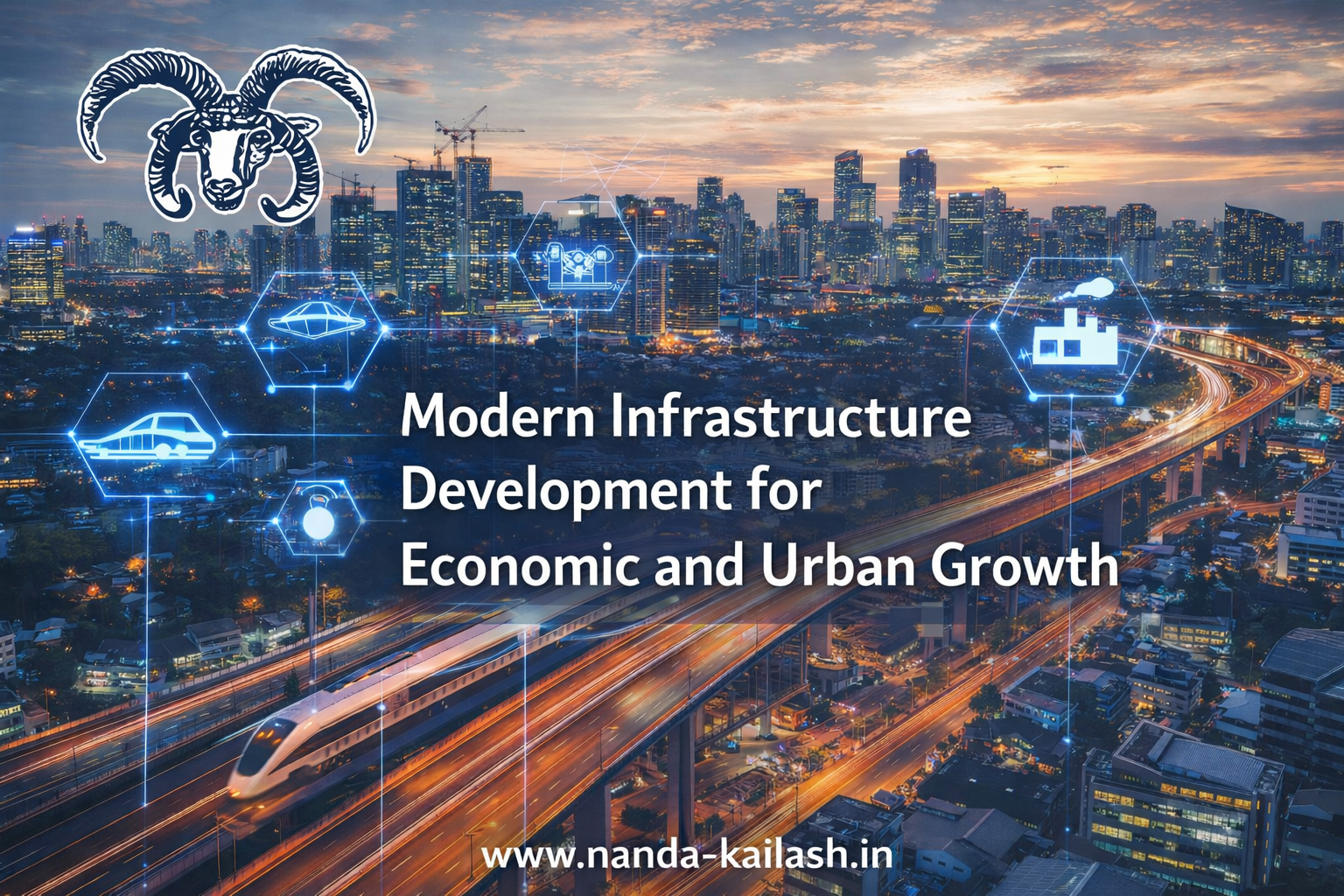
Modern infrastructure development plays a vital role in driving economic progress and supporting rapid urban growth. As populations expand and cities evolve into economic hubs, the demand for efficient, sustainable, and technology-driven infrastructure has increased significantly. Roads, bridges, power systems, digital networks, water supply, and public transport form the backbone of a nation’s development. When planned and executed effectively, modern infrastructure not only improves living standards but also fuels long-term economic and urban growth.
Importance of Modern Infrastructure in Economic Development
Infrastructure is a key driver of economic activity. Well-developed transportation networks reduce logistics costs, improve connectivity, and enable faster movement of goods and services. High-quality roads, railways, ports, and airports attract domestic and foreign investment by making trade and business operations more efficient.
Reliable power and energy infrastructure are equally critical. Industries, commercial establishments, and households depend on uninterrupted electricity for productivity and daily life. Modern power infrastructure, including renewable energy systems and smart grids, ensures energy security while supporting sustainable economic growth. Countries investing in advanced infrastructure often experience higher employment, increased industrial output, and improved global competitiveness.
Role of Infrastructure in Urban Growth
Urbanization is accelerating worldwide, especially in developing economies. Modern infrastructure development helps cities manage this growth efficiently. Well-planned urban infrastructure supports housing, sanitation, water supply, waste management, and transportation systems, making cities more livable and resilient.
Public transportation systems such as metro rail, electric buses, and rapid transit corridors reduce traffic congestion and pollution while improving mobility. Smart urban planning combined with modern infrastructure ensures balanced land use, better connectivity between residential and commercial areas, and reduced pressure on city resources.
Technological Advancements in Infrastructure Development
Technology has transformed the way infrastructure is planned, built, and managed. Digital tools such as Building Information Modeling (BIM), Geographic Information Systems (GIS), and artificial intelligence enable accurate planning, cost control, and efficient project execution. These technologies reduce construction delays, optimize resources, and improve safety standards.
Smart infrastructure integrates sensors, data analytics, and automation to monitor real-time performance. For example, smart traffic systems adjust signals based on traffic flow, while intelligent water systems detect leaks and prevent wastage. Such advancements improve service delivery and reduce operational costs for urban authorities.
Sustainable Infrastructure for Long-Term Growth
Sustainability is a core element of modern infrastructure development. With increasing concerns about climate change and environmental degradation, governments and developers are focusing on eco-friendly infrastructure solutions. Green buildings, renewable energy projects, water recycling systems, and sustainable transport reduce carbon emissions and conserve natural resources.
Sustainable infrastructure not only protects the environment but also ensures long-term economic benefits. Energy-efficient systems lower operating costs, while resilient infrastructure minimizes losses caused by natural disasters. Cities that prioritize sustainability are better equipped to handle future challenges and ensure inclusive growth.
Public-Private Partnerships and Investment
Modern infrastructure development requires significant investment and collaboration. Public-Private Partnerships (PPPs) have emerged as an effective model to fund and manage large infrastructure projects. These partnerships combine government support with private sector expertise, innovation, and capital.
Infrastructure investment stimulates job creation across construction, manufacturing, technology, and service sectors. It also enhances regional development by connecting rural and urban areas, promoting balanced economic growth.
Challenges in Modern Infrastructure Development
Despite its benefits, infrastructure development faces challenges such as land acquisition issues, funding constraints, regulatory delays, and environmental concerns. Rapid urbanization can strain existing infrastructure if development is not planned properly. Addressing these challenges requires strong governance, transparent policies, and long-term planning.
Skilled workforce availability and adoption of advanced technology are also crucial. Continuous training and capacity building help ensure successful implementation of modern infrastructure projects.
Conclusion
Modern infrastructure development is a cornerstone of economic and urban growth. It enhances productivity, attracts investment, supports sustainable cities, and improves quality of life. By integrating technology, sustainability, and strategic planning, nations can build resilient infrastructure that meets the needs of growing populations and evolving economies. Investing in modern infrastructure today lays the foundation for prosperous cities, strong economies, and a sustainable future.
About the Author