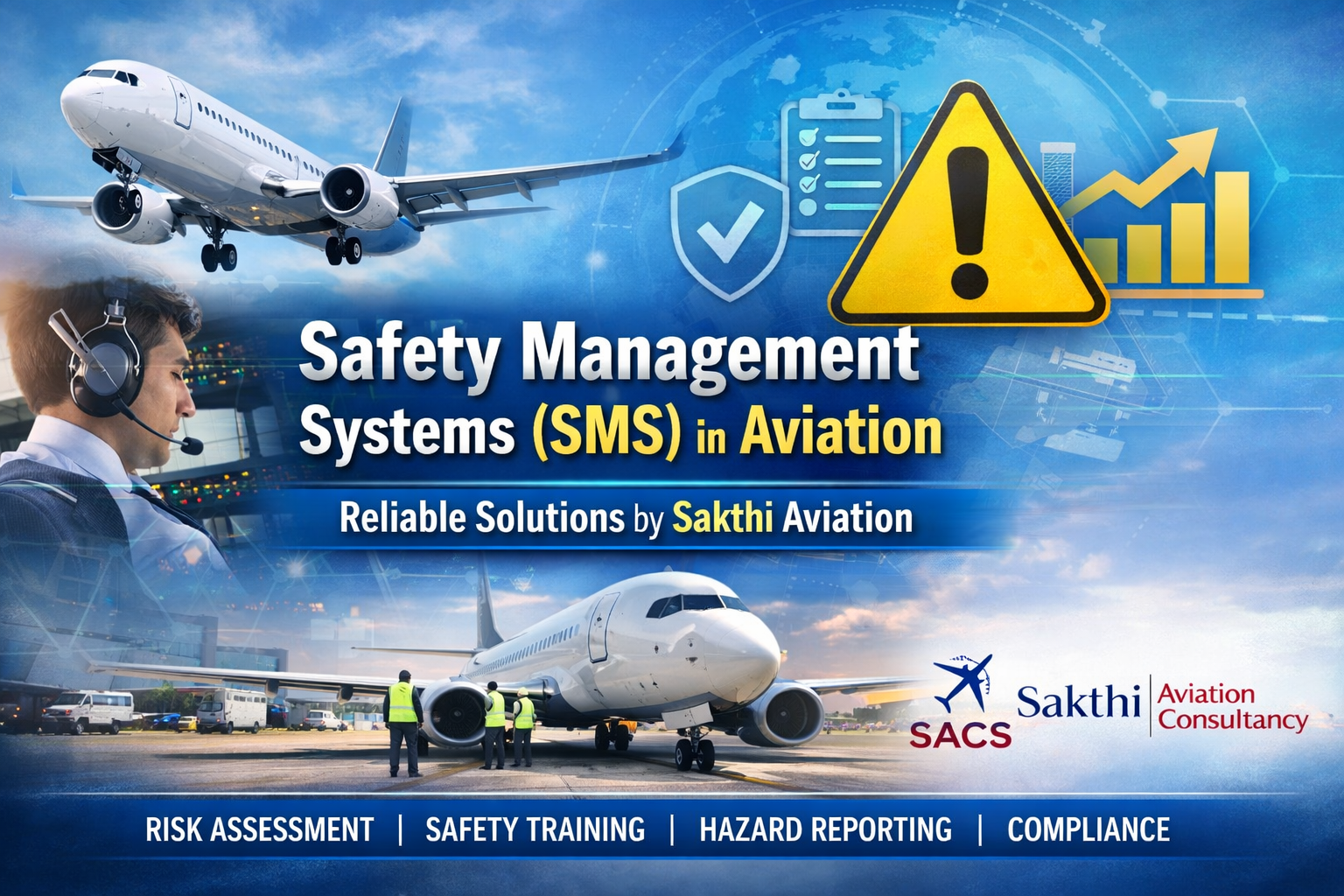
Safety is the backbone of the aviation industry. Every flight operation, ground handling activity, and maintenance procedure must follow strict safety standards to ensure passenger protection and operational efficiency. A Safety Management System (SMS) is a structured and proactive approach to managing safety risks in aviation. It integrates policies, procedures, and practices that help organizations identify hazards, assess risks, and implement effective mitigation strategies.
Globally, aviation authorities like the International Civil Aviation Organization (ICAO) mandate the implementation of SMS for airlines, airports, and aviation service providers. In India, the Directorate General of Civil Aviation (DGCA) has made SMS compliance compulsory for aviation organizations. This regulatory requirement highlights the importance of having a well-structured safety framework in place.
What is a Safety Management System (SMS)?
A Safety Management System is a systematic approach to managing safety that includes organizational structures, accountabilities, policies, and procedures. It is not just about complying with regulations but about building a strong safety culture within the organization. SMS focuses on proactive hazard identification rather than reacting only after incidents occur.
An effective SMS is built on four key pillars:
- Safety Policy and Objectives – Establishing clear safety commitments from top management and defining responsibilities across all levels.
- Safety Risk Management – Identifying hazards, assessing risks, and implementing mitigation measures.
- Safety Assurance – Monitoring and measuring safety performance through audits, inspections, and data analysis.
- Safety Promotion – Providing training, communication, and awareness programs to strengthen safety culture.
- By integrating these elements, aviation organizations can minimize accidents, improve operational efficiency, and enhance regulatory compliance.
Importance of SMS in Aviation
The aviation industry operates in a highly dynamic and complex environment. Aircraft operations, air traffic control, ground handling, and maintenance activities involve multiple stakeholders and interconnected systems. A minor oversight can lead to serious consequences. SMS provides a structured framework to manage these complexities effectively.
With SMS, organizations can:
- Detect potential hazards before they escalate into incidents.
- Reduce operational risks and financial losses.
- Improve decision-making through data-driven safety analysis.
- Strengthen compliance with national and international aviation standards.
- Enhance reputation and stakeholder confidence.
- In short, SMS shifts the focus from reactive safety management to proactive and predictive safety strategies.
Reliable SMS Solutions by Sakthi Aviation
Sakthi Aviation Consultancy Services is a trusted name in aviation consultancy, offering comprehensive Safety Management System solutions tailored to the needs of aviation organizations. With deep industry expertise and regulatory knowledge, Sakthi Aviation supports airlines, airports, training institutes, and maintenance organizations in establishing and maintaining robust SMS frameworks.
Their services typically include:
- SMS Documentation and Manual Development – Preparing customized SMS manuals aligned with ICAO and DGCA guidelines.
- Gap Analysis and Compliance Audits – Identifying deficiencies and recommending corrective actions.
- Risk Assessment and Hazard Identification Workshops – Training teams to proactively identify and mitigate safety risks.
- SMS Implementation Support – Assisting organizations in setting up reporting systems, safety committees, and performance indicators.
- Training and Awareness Programs – Conducting workshops and seminars to promote a strong safety culture.
Sakthi Aviation ensures that safety is not treated as a one-time compliance requirement but as a continuous improvement process embedded in daily operations.
Building a Strong Safety Culture
One of the most critical aspects of SMS is developing a positive safety culture. This involves encouraging open reporting of hazards without fear of punishment, fostering accountability, and promoting continuous learning. Sakthi Aviation emphasizes leadership commitment and employee involvement to build a safety-first mindset across the organization.
By leveraging expert guidance and industry best practices, aviation organizations can transform their safety management processes into strategic advantages. A well-implemented SMS not only reduces risks but also enhances operational reliability and customer trust.
Conclusion
Safety Management Systems are essential for modern aviation operations. With regulatory mandates from ICAA and DGCA, organizations must adopt structured safety frameworks to remain compliant and competitive. Sakthi Aviation Consultancy Services provides reliable, practical, and customized SMS solutions that help aviation businesses achieve the highest safety standards. By partnering with experienced consultants, organizations can ensure safer skies, stronger compliance, and sustainable growth in the aviation sector.
About the Author