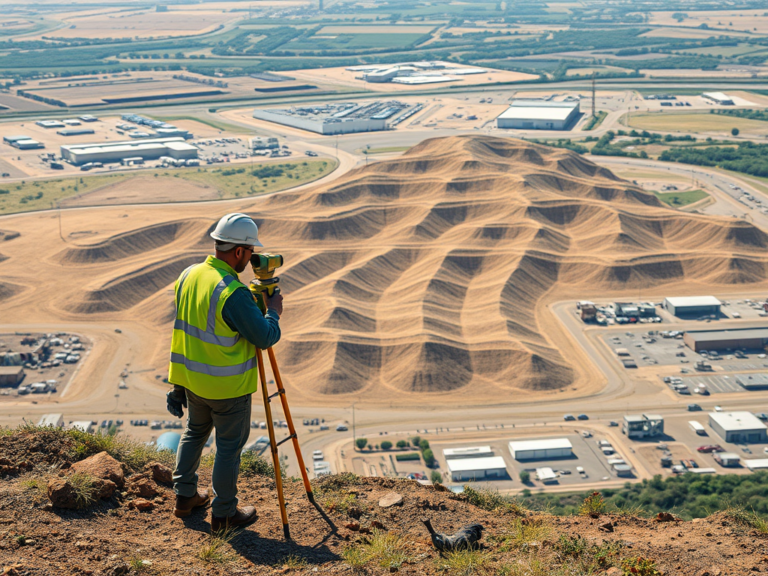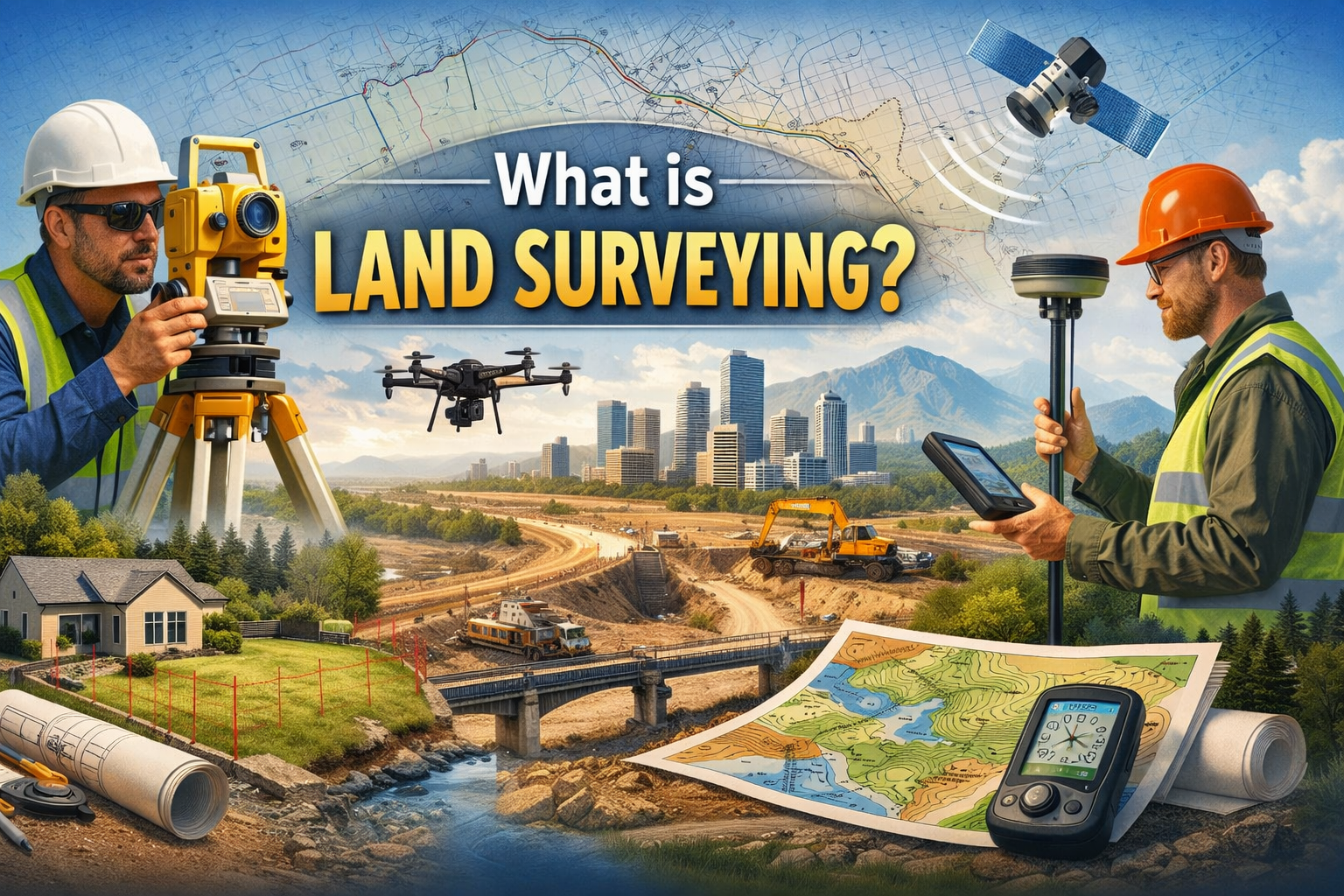
Land surveying is a fundamental discipline that plays a crucial role in the planning, development, ownership, and management of land. It is the science, art, and technology of determining the relative positions of points on, above, or below the Earth’s surface by measuring distances, angles, and elevations. The information collected through land surveying is used to prepare maps, establish property boundaries, support construction projects, and ensure legal clarity in land ownership.
At its core, land surveying helps define where one piece of land begins and ends. This is essential because land is a valuable and limited resource. Clear and accurate boundaries prevent disputes between property owners and provide legal certainty for buying, selling, or developing land. Surveyors use specialized tools and techniques to measure land precisely and document their findings in maps or survey reports that are recognized by law.
History and Evolution of Land Surveying
Land surveying is one of the oldest professions in the world. Ancient civilizations such as the Egyptians used basic surveying methods to re-establish property boundaries after the annual flooding of the Nile River. Over time, surveying evolved alongside mathematics, geometry, and astronomy. Today, modern land surveying combines traditional measurement principles with advanced digital technology, making it faster, more accurate, and more reliable than ever before.
Types of Land Surveying
There are several types of land surveying, each serving a specific purpose:
- Boundary Surveying – Determines legal property boundaries and corners. This is commonly required during land purchase, sale, or dispute resolution.
- Topographic Surveying – Maps natural and man-made features such as hills, rivers, roads, buildings, and trees, along with elevation details.
- Construction Surveying – Provides reference points, alignments, and levels for construction projects like buildings, roads, bridges, and dams.
- Cadastral Surveying – Used for land registration and taxation, defining land parcels for official records.
- Geodetic Surveying – Covers large areas and takes the Earth’s curvature into account, often used for national mapping and infrastructure planning.
Tools and Technology Used
Traditional land surveying relied on chains, compasses, and theodolites. While these tools are still relevant for learning fundamentals, modern surveyors now use advanced equipment such as total stations, Global Positioning System (GPS) devices, drones, and Geographic Information Systems (GIS). These technologies allow surveyors to collect highly accurate data, even in difficult terrain, and present it in digital formats that can be easily shared and analyzed.
Importance of Land Surveying
Land surveying is essential for several reasons. It ensures legal protection by clearly defining property boundaries. It supports safe and efficient construction by providing accurate measurements and site data. It aids urban and rural planning, helping governments design roads, utilities, and public infrastructure. Surveying also contributes to environmental management, as accurate land data is vital for flood control, conservation, and land-use planning.
Role of a Land Surveyor
A land surveyor is a trained professional responsible for carrying out surveys, analyzing data, and preparing official documents. Surveyors must have strong knowledge of mathematics, law, and technology, along with fieldwork skills. Their work often serves as legal evidence in courts and government records, making accuracy and integrity extremely important.
Conclusion
In summary, land surveying is the foundation upon which land ownership, development, and infrastructure are built. Without accurate surveying, modern society would face constant land disputes, unsafe construction, and inefficient planning. As technology continues to advance, land surveying remains a vital profession, adapting to new tools while maintaining its essential role in shaping and managing the land we depend on every day.
About the Author